The Evolution of the Game App: From Pixelated Snakes to Pocket Universes
Remember the days when the pinnacle of mobile entertainment was guiding a perpetually hungry line of pixels around a tiny, monochromatic screen? Nokia’s Snake was an absolute revelation at the time, but looking back, it’s wild to think that’s where the game app started. Fast forward a few decades, and the landscape is entirely unrecognizable. We went from simple, pre-installed distractions to massive, sprawling digital ecosystems. The term “game app” used to imply something less-than, a compromised and watered-down experience compared to a “real” video game on a PC or console. Now? That distinction is practically dead in the water.
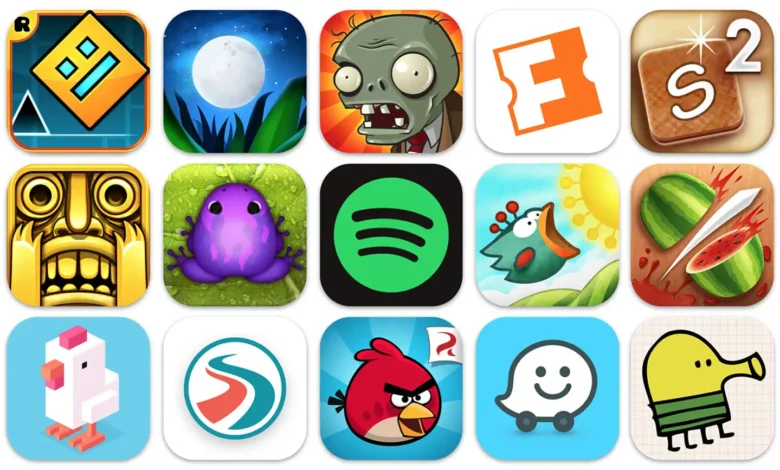
The true catalyst for this shift, of course, was the smartphone revolution. When capacitive touchscreens became the norm, developers suddenly had a brand new, highly intuitive canvas to work with. Early mega-hits like Angry Birds and Fruit Ninja didn’t just port existing concepts over to a phone; they fundamentally understood how to use the hardware. Swiping, tapping, and tilting became natural controls, making gaming accessible to literally anyone holding a device. This era cemented the mobile game app as a mainstream cultural force, proving that you didn’t need a bulky controller to get utterly hooked on a satisfying digital loop.
Today, we are undeniably living in the golden age of mobile gaming, where the hardware in your pocket rivals dedicated, older-generation consoles. Titles like Genshin Impact, Call of Duty: Mobile, and Honkai: Star Rail are pushing boundaries we previously thought impossible for a battery-powered handheld device. We’re talking about high-fidelity 3D graphics, fully voiced complex narratives, cross-platform multiplayer, and massive open worlds. The modern game app isn’t just a way to kill five minutes while waiting for the bus anymore; for millions of players globally, it is their primary, dedicated gaming platform, complete with its own massive, multi-million dollar esports ecosystem.
Decoding the Genres: Finding Your Perfect Digital Niche

Game app if you open the App Store or Google Play right now, the sheer volume of options is frankly staggering. The game app ecosystem is broken down into countless micro-genres, but the undisputed king of sheer download volume is the hyper-casual market. These are your match-three puzzlers, your endless runners, and your physics-based sorting games. As an industry insider, I can tell you these are designed with brilliant, ruthless precision. They offer immediate gameplay loops, require zero tutorials, and provide instant dopamine hits. They are the ultimate “pick up and play for three minutes” experiences, engineered to perfection for busy lives and short attention spans.
On the complete opposite end of the spectrum, we have the hardcore RPGs (Role-Playing Games) and deep strategy titles. These game apps are demanding. They ask for your time, your dedication, and often, your clan loyalty. Whether you are managing a fantasy kingdom, leading a squad of anime-styled heroes through turn-based combat, or optimizing resource production in a sci-fi colony, these games are marathons, not sprints. They heavily rely on complex progression systems, intricate skill trees, and often, the infamous “gacha” mechanic—a randomized digital loot system that keeps players rolling the dice in hopes of unlocking that rare, top-tier character.
Then there’s the explosive multiplayer and competitive scene. Battle Royales and MOBA (Multiplayer Online Battle Arena) games have proven beyond a shadow of a doubt that highly competitive, team-based gameplay works flawlessly on a touch screen. These game apps thrive on community and competition. They aren’t just software; they are vibrant social hubs where friends meet up daily to strategize, climb the ranked ladders, and talk a little trash. The fact that a competitive match requires split-second reflexes, intense tactical awareness, and smooth voice comms—all operating seamlessly on a six-inch piece of glass—is a true testament to how far mobile networking and UI design have evolved.
The Hidden Mechanics: How a Game App Keeps You Hooked
Have you ever wondered why it’s so incredibly hard to put down a seemingly simple game app? It’s not magic; it’s meticulous psychological design. Behind the colorful graphics and catchy soundtracks are sophisticated systems built by data scientists and monetization experts. The core of this is the “gameplay loop”—a repeating cycle of action, reward, and upgrade. You complete a task, you get resources, you use those resources to get stronger, which allows you to complete harder tasks. It’s a beautifully crafted treadmill that constantly drips dopamine into your brain, making the act of progressing feel deeply, fundamentally satisfying.
This psychology ties directly into how a modern game app actually makes its money. The era of paying a flat $4.99 upfront is largely over, replaced almost entirely by the “freemium” model. The game is free to download, completely removing any barrier to entry, but the real revenue comes from microtransactions, seasonal battle passes, and cosmetic items. Experts in the field call this “live-ops” (live operations). Developers aren’t just releasing a game and walking away; they are treating the game app as a continuous, living service. They analyze player data in real-time, tweaking item drop rates, adjusting level difficulty, and rolling out targeted store offers to maximize both player retention and spending.
To keep players coming back day after day, developers utilize a massive arsenal of engagement tactics. Daily login bonuses essentially penalize you for taking a day off. Limited-time events create a powerful FOMO (Fear Of Missing Out), urging you to play right now to secure an exclusive item before it’s gone forever. Energy or stamina systems artificially gate your progress, forcing you to return later or pay real money to speed things up. While some view these mechanics as predatory, from a pure design perspective, they are astonishingly effective. A successful game app isn’t just a fun distraction; it becomes a seamlessly integrated, deeply ingrained daily habit.
Elevating Your Setup: Pro Tips for the Mobile Gamer
If you’re starting to take your game app sessions seriously, relying on your phone’s default setup just isn’t going to cut it anymore. The first thing you need to master is hardware optimization. High-end mobile games are incredibly resource-intensive. To prevent thermal throttling—which is when your phone’s processor slows itself down to stop from overheating—you need to manage your in-game settings. Don’t blindly max out the graphics. Drop the visual fidelity slightly to guarantee a stable 60 or 120 frames per second. A smooth framerate will always trump pretty shadows, especially in competitive shooters or fast-paced action games. Also, absolutely utilize your phone’s built-in “Gaming Mode” to block annoying incoming notifications and dedicate all available RAM directly to the app.
Next, let’s talk about accessories. Touch controls have come a long way, but your thumbs inevitably cover up half the screen. If you play platformers, racing games, or demanding ports of console titles, investing in a Bluetooth controller is a massive game-changer. Companies like Razer and Backbone make exceptional snap-on controllers that essentially turn your smartphone into a high-powered Nintendo Switch. For competitive FPS players who prefer touch controls, physical “shoulder triggers” that clip onto the top of your phone can drastically improve your reaction times by letting you use four fingers instead of two. And if you are grinding a heavy 3D RPG for hours, a magnetic external cooling fan is practically mandatory to keep your battery from degrading from the immense heat.
Finally, we need to have a quick expert chat about digital hygiene. Because a game app is designed from the ground up to be endlessly engaging and perfectly accessible, it’s very easy to let it consume too much of your time and your wallet. Treat mobile gaming like any other hobby: set healthy, strict boundaries. Utilize your phone’s native screen time tracking features to set hard daily limits on your most addictive apps. More importantly, detach your credit card from immediate app store purchases to create a layer of friction. By requiring yourself to manually enter a password or buy a physical gift card for microtransactions, you give your brain a crucial second to step back and ask, “Do I really need these digital gems?” Play smart, play safe, and keep it fun.