The FAST Revolution: Understanding the Pluto TV Phenomenon
If you’ve been keeping an eye on the streaming wars over the last few years, you’ve likely noticed a massive shift in how we consume digital media. For a long time, the narrative was dominated by “SVOD” (Subscription Video on Demand) giants like Netflix and Max. But as subscription fatigue set in and monthly bills started looking like old-school cable packages, a new hero emerged: FAST. This stands for “Free Ad-Supported Streaming TV,” and at the very front of that charge is Pluto TV. Owned by Paramount Global, Pluto TV has managed to do something that seemed impossible a decade ago—it made “linear TV” cool again for the digital generation.
The genius of Pluto TV lies in its simplicity and its price tag, which is exactly zero dollars. In an era where every media company wants a piece of your credit card, Pluto TV asks for nothing but your attention. It operates on a model that feels nostalgic yet perfectly modernized. When you open the app, you aren’t greeted by a cold, silent algorithm suggesting a “top ten” list. Instead, you are dropped directly into a live broadcast. There is something fundamentally relaxing about the “lean back” experience—letting the platform decide what’s on next rather than scrolling through an endless carousel of choices for forty-five minutes.
From an expert perspective, Pluto TV’s success is a masterclass in content curation and distribution. It doesn’t try to be a “Netflix killer” by producing $200 million original series. Instead, it leverages the massive library of its parent company, Paramount, along with hundreds of third-party partnerships. It breathes new life into classic shows, cult movies, and niche documentaries by organizing them into dedicated, 24/7 channels. Whether it’s a channel that plays nothing but Star Trek, a dedicated Baywatch feed, or a constant stream of 80s action movies, Pluto TV has turned “scrolling” into an art form that feels both familiar and infinitely fresh.
Navigating the Grid: The Art of the Linear Experience

The most striking feature of Pluto TV is its user interface, which intentionally mimics the classic cable TV grid. This is a bold design choice in the age of on-demand everything, but it’s the secret sauce that makes the platform so “sticky.” By providing a visual timeline of what’s playing now and what’s coming up next across hundreds of channels, Pluto TV taps into the “appointment viewing” mindset. It recreates the “water cooler” moments of old-school television, where thousands of people are watching the same movie or episode at the exact same time, complete with the rhythmic pacing of traditional commercial breaks.
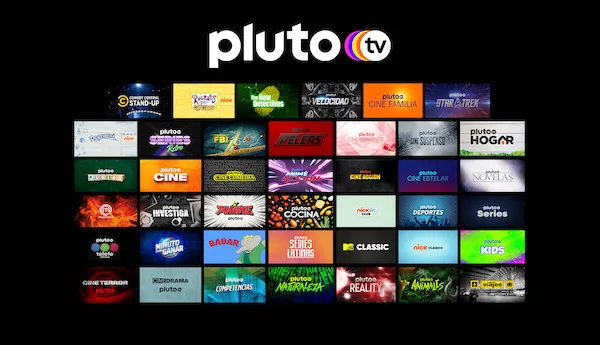
However, don’t let the retro grid fool you—the tech under the hood is remarkably sophisticated. Pluto TV offers over 250 unique channels, categorized into intuitive buckets like Movies, Entertainment, News, Binge-Watch, and Sports. Because the platform is free, the “cost of entry” for a user to try something new is non-existent. You might drop in for the 24/7 CSI channel but end up spending two hours watching a documentary about deep-sea creatures on a science niche feed. This “discovery” engine is far more effective than most paid AI-driven recommendations because it encourages low-stakes exploration in real-time.
Furthermore, Pluto TV has mastered the “local and live” aspect that many streaming services struggle with. They offer a surprisingly robust selection of news channels, including CBSN, NBC News Now, and CNN, giving cord-cutters access to breaking news without a $70-a-month YouTube TV subscription. They also have a massive On-Demand library for those times when you absolutely must watch a specific movie right now. This hybrid approach—combining the serendipity of live TV with the convenience of on-demand—is why Pluto TV has managed to maintain over 80 million monthly active users globally as of 2026.
The Economics of Free: How Pluto TV Stays Profitable
You might be wondering: if I’m not paying for it, how does Pluto TV stay in business? The answer lies in the “Ad-Supported” part of the FAST acronym. Pluto TV has pioneered a highly efficient advertising model that is much more palatable than the intrusive ads of 1990s broadcast television. Because the platform is digital, the ads can be more targeted and relevant to the viewer. For Paramount Global, Pluto TV is a massive data-gathering machine and a revenue engine that generates billions of dollars in ad sales, proving that “Free” is a very lucrative business model when executed correctly.
For the user, this means the “ad load” is generally lighter than what you’d experience on traditional cable. You might get a few minutes of commercials every half hour, which serves as the perfect time to grab a snack or check your phone. Because the service is free, there is a psychological “pact” between the viewer and the platform: I watch a few ads, and you give me thousands of hours of high-quality entertainment. It’s a value proposition that is becoming increasingly attractive as inflation squeezes household budgets and people look for ways to cut their monthly recurring costs without sacrificing their favorite shows.
Additionally, Pluto TV serves as a powerful “top-of-funnel” marketing tool for Paramount+. You’ll often see the first few seasons of a hit show like Yellowstone or 1883 playing on Pluto TV to get viewers hooked. Once they are invested in the story, the platform gently nudges them toward the paid Paramount+ service to see the latest episodes. This “freemium” ecosystem allows the parent company to monetize its content at every stage of its lifecycle—from a high-priced theatrical release to a paid streaming window, and finally to a long, profitable life on the digital airwaves of Pluto TV.
Global Expansion and the Future of FAST
Looking toward the future, Pluto TV is no longer just an American success story. It has aggressively expanded into Europe, Latin America, and even parts of Asia, tailoring its channel lineups to local tastes and languages. In 2026, the “Pluto TV CZ” or “Pluto TV LatAm” versions of the site feature localized content that resonates with regional audiences. By partnering with local broadcasters and content creators, Pluto TV ensures that it isn’t just a “Hollywood export,” but a truly global platform that understands the cultural nuances of every market it enters.
The technological roadmap for Pluto TV is equally exciting. We are starting to see the integration of more interactive features, such as “watch parties” where you can sync your live stream with friends, or “shoppable ads” where you can buy a product directly from the screen with your remote. As smart TVs become more powerful and internet speeds continue to climb, the line between “internet browsing” and “watching TV” will continue to blur. Pluto TV is perfectly positioned at this intersection, acting as the primary interface for millions of smart TVs worldwide.
Ultimately, Pluto TV represents the “comfort food” of the streaming world. It is reliable, easy to use, and always has something playing that fits your mood. In a world that often feels overwhelmingly complex and expensive, Pluto TV provides a simple, high-quality escape that respects your time and your wallet. Whether you are a hardcore cord-cutter who hasn’t seen a cable box in a decade or a casual viewer looking for something to put on in the background while you cook dinner, Pluto TV has earned its spot as a mandatory app in the modern media landscape. The “Free TV” era isn’t just coming; it’s already here, and Pluto is leading the way.