
The Titan of the Forest: Introducing a Natural Wonder
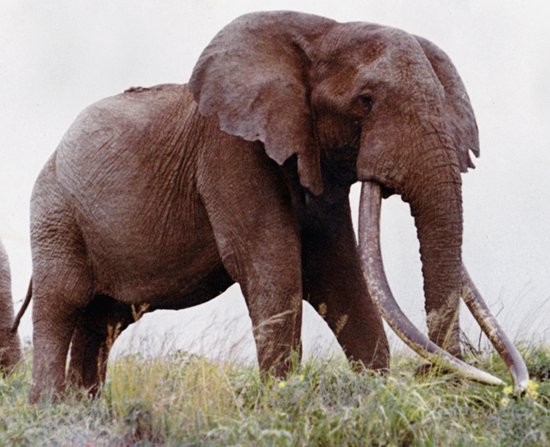
When you dive into the annals of natural history, few individuals—human or animal—command as much awe as the legendary elephant known as Ahmed. Often referred to in European historical circles as Der Elefantenbulle Ahmed, this majestic bull was more than just a member of the Loxodonta africana species; he was a living monument to the era of the “Great Tuskers.” Living primarily in the Marsabit National Reserve in northern Kenya during the mid-20th century, Ahmed became a global symbol of wildlife grandeur. His tusks were so massive that they reportedly scraped the ground as he walked, a sight that turned him into a mythic figure for explorers, photographers, and conservationists alike.
To understand the weight of Ahmed’s legacy in 2026, one must appreciate the sheer scale of his physical presence. Experts estimate that each of his tusks weighed over 67 kilograms (nearly 150 pounds). In the world of elephant biology, such ivory is the result of exceptional genetics combined with a long, protected life. Ahmed was a “Super Tusker,” a rare subset of elephants whose tusks grow to reach the ground. His silhouette, framed against the mist-covered volcanic craters of Mount Marsabit, became one of the most iconic images of African wilderness, representing a time before the poaching crises of the late 20th century had decimated these genetic lineages.
Casually speaking, Ahmed was the ultimate “celebrity” of the animal kingdom. By the 1960s and early 70s, he was perhaps the most famous elephant in the world. Visitors from across the globe traveled to the rugged terrain of Marsabit just to catch a glimpse of the “King.” But unlike today’s social media-driven fame, Ahmed’s notoriety was built on a foundation of genuine biological wonder. He lived a life of relative seclusion in the dense, high-altitude forests, appearing like a ghost through the trees—a massive, grey sentinel who seemed to carry the ancient history of the continent on his weary shoulders.
A Presidential Decree: The First Protected Animal

The story of Der Elefantenbulle Ahmed took a historic turn in 1970, marking a watershed moment in the history of global conservation. As the threat of trophy hunting and ivory poaching began to loom larger over Africa’s megafauna, a grassroots campaign led by school children and conservationists reached the ears of Kenya’s first President, Mzee Jomo Kenyatta. In an unprecedented move, Kenyatta issued a Presidential Decree that placed Ahmed under his personal protection. This was not just a symbolic gesture; it was a legal mandate that effectively made Ahmed the first “individual” animal in history to be granted sovereign protection by a state.
From an expert perspective, this decree changed the trajectory of how we value individual animals within a species. To ensure his safety, Ahmed was assigned a 24-hour guard consisting of five armed rangers. These men lived alongside the bull, following him at a respectful distance through the thickets of Marsabit to deter any would-be poachers. This “Secret Service for an Elephant” was a revolutionary concept in the 1970s. It shifted the narrative from managing populations to protecting individual “ambassadors” of a species. Ahmed wasn’t just an elephant anymore; he was a national treasure and a living ward of the state.
This level of protection allowed Ahmed to do something that few of his peers with such massive ivory could: he grew old. In the brutal economy of the ivory trade, a bull with Ahmed’s tusks would typically be targeted long before reaching his prime. By granting him this protection, Kenya allowed science to observe the natural lifecycle of a Super Tusker. Ahmed became a living laboratory for researchers studying elephant behavior and longevity. His presence in Marsabit helped stabilize the local ecosystem and provided a focal point for the early tourism industry, proving that a living elephant was worth infinitely more to a nation’s economy and pride than a pair of ivory tusks on a mantelpiece.
The Biological Legacy: What Ahmed Taught the World
Beyond the headlines and the presidential protection, Der Elefantenbulle Ahmed provided invaluable insights into elephant physiology. Experts who studied him noted that his massive tusks influenced his behavior and even his physical posture. Because the ivory was so heavy, Ahmed developed a unique way of resting his head on low-hanging branches or mounds of earth to relieve the strain on his neck muscles. This “resting pose” became a signature trait that photographers sought to capture. It highlighted the evolutionary trade-offs involved in growing such extreme ornaments; while they were symbols of reproductive success and dominance, they also required a specialized lifestyle to maintain.
Ahmed’s diet and habitat preferences also shed light on why Marsabit was such a perfect sanctuary. The volcanic soil of the region is rich in minerals, and the mountain’s unique “cloud forest” provided a year-round supply of high-nutrient vegetation. This allowed him to maintain his massive bulk—estimated at over 6 tons—even into his senior years. Biologists noted that Ahmed was a relatively gentle bull, often seen in the company of two smaller “askaris” (the Swahili word for guards or soldiers). In elephant society, older bulls often mentor younger males, and Ahmed’s role as a patriarch was essential for the social stability of the Marsabit herds.
When Ahmed finally passed away in 1974 of natural causes (at the age of approximately 55), the world mourned. But even in death, his contribution to science continued. An autopsy revealed that his tusks were not just long, but exceptionally dense. More importantly, his passing allowed for the creation of a meticulous cast of his body. Today, a life-sized bronze recreation of Ahmed stands outside the National Museums of Kenya in Nairobi. This monument serves as a permanent record of his proportions, allowing modern students of zoology to stand in the shadow of a giant and appreciate the sheer scale of the “Great Tuskers” that once roamed the continent in abundance.
Conservation in 2026: The “Ahmed Effect” Today
As we look at the state of wildlife in 2026, the spirit of Der Elefantenbulle Ahmed lives on through the “Individual Protection” models currently used for high-value species like Northern White Rhinos and the remaining Super Tuskers in Tsavo. The lesson learned from Ahmed—that some individuals are so genetically or culturally significant that they require dedicated security—has become a cornerstone of modern conservation strategy. While we now use AI-driven drones, satellite tracking, and thermal imaging to protect these giants, the core philosophy remains the same: the protection of the individual is a victory for the species.
Expert analysis of the current “Super Tusker” population in 2026 suggests that while they are still critically endangered, the intensive protection protocols pioneered for Ahmed have helped stabilize their numbers. In Kenya’s Tsavo East and West, a handful of bulls with ivory exceeding 45 kilograms per side are currently under “constant watch.” These modern-day Ahmeds are the biological blueprints for the future. By protecting them, conservationists ensure that the “big tusk” genes continue to be passed down, hopefully leading to a future where such giants are once again a common sight rather than a protected anomaly.
Ultimately, Ahmed’s story is a reminder of the power of human intervention when aligned with nature. He was a creature that should have been a victim of his own beauty, yet he became the most guarded animal on Earth. He proves that we have the capacity to value life over profit and legacy over plunder. For the “Casual Expert” of 2026, the name Ahmed isn’t just a trivia answer about a big elephant; it is a call to action. It reminds us that our greatest natural wonders require our greatest efforts to preserve. As long as the bronze statue in Nairobi stands, and as long as his descendants roam the red dust of Kenya, the King of Marsabit will never truly be gone. Let’s go.
