The Federal Framework: Understanding the German Identity
When people think of Germany, the mind often jumps to a checklist of efficient stereotypes: punctual trains, high-quality engineering, and the festive roar of Oktoberfest. While these cultural staples have their roots in reality, the Germany of 2026 is a far more nuanced and dynamic entity than the “Efficiency Machine” label suggests. It is a nation built on a foundation of “Federalism” (Fo¨deralismus), where sixteen distinct states (Bundesla¨nder) act as the lifeblood of the country. From the maritime soul of Hamburg in the north to the alpine grandeur of Bavaria in the south, Germany is not a monolith; it is a patchwork of regional identities that collectively form the sturdiest economic and political pillar of the European Union.
To understand the modern German identity, one must grasp the concept of Heimat—a word that translates roughly to “homeland” but carries a deep emotional weight of belonging and local pride. In 2026, this sense of localism is what drives the country’s resilience. Whether it is the artistic, gritty pulse of Berlin or the affluent, high-tech hub of Munich, Germans find their strength in their specific region’s history and industry. This decentralized structure is no accident; it was a deliberate post-war design to ensure that power remained distributed. This has resulted in a country where “second-tier” cities like Leipzig, Stuttgart, and Düsseldorf often outshine global capitals in terms of quality of life and economic opportunity.
Expertly speaking, Germany is currently navigating a period of “Societal Recalibration.” As the nation celebrates its role as a stable democratic leader, it is also grappling with the complexities of being a premier destination for global migration. This has created a vibrant, multicultural tapestry that is redefining what it means to be German. You see it in the culinary scene of Frankfurt, where traditional Schnitzel houses sit comfortably alongside world-class Turkish and Vietnamese eateries. Germany is a nation that is learning to blend its historical precision with a new, cosmopolitan fluidness, proving that even the most structured society can evolve with the times.
The Industrial Pivot: Engineering the Green Revolution
Economically, Germany has long been the “Workroom of the World,” but in 2026, the focus has shifted from internal combustion to “Intelligent Infrastructure.” The legendary Mittelstand—the small-to-medium-sized enterprises that form the backbone of the German economy—is currently undergoing a massive digital and green transformation. While the world watches the giants like Volkswagen and Siemens, it is these thousands of family-owned specialized firms that are leading the way in hydrogen fuel technology, high-precision robotics, and sustainable manufacturing. Germany isn’t just making cars anymore; it is making the tools that build a carbon-neutral future.
The “Energiewende” (Energy Transition) is the most ambitious project in modern German history. As an expert observer, it is clear that Germany has moved past the “growing pains” phase of its renewable energy shift. In 2026, wind and solar power aren’t just supplements; they are the primary drivers of the national grid. The country has successfully decoupled its economic growth from its carbon footprint, providing a blueprint for other industrialized nations. This transition has birthed a new industrial sector focused on “Circular Economy” logistics, where waste is treated as a raw material and efficiency is measured by environmental impact as much as by the bottom line.
However, the “Industrial Pivot” isn’t without its challenges. The transition to electric vehicles (EVs) has required a total overhaul of the automotive supply chain in regions like Baden-Württemberg. Yet, the German response has been characteristically thorough. Huge investments in battery gigafactories and AI-driven production lines have ensured that “Made in Germany” remains a global gold standard for quality, even in a digital-first world. The German economy is proving that you don’t have to choose between heritage and innovation; you can use the discipline of the former to master the chaos of the latter.
Cultural Exports: The “Soft Power” of the Berlin Effect
Beyond the factories and the federal halls, Germany’s “Soft Power” in 2026 is at an all-time high, largely driven by the “Berlin Effect.” The capital city has moved past its post-reunification identity to become the undisputed creative heart of Europe. It is a magnet for tech startups, electronic music pioneers, and avant-garde artists. This cultural energy isn’t confined to Berlin; it radiates through the “Ruhr Area,” which has transformed from an industrial coal-and-steel belt into a massive cultural corridor of museums, theaters, and design universities. Germany is exporting its lifestyle—one that prioritizes work-life balance, environmental consciousness, and intellectual rigor.
One cannot discuss German culture without acknowledging the Vereinskultur (club culture). Almost every German belongs to at least one club, whether it’s for football, hiking, choral singing, or even allotment gardening. This social glue is what keeps the country grounded. In 2026, these clubs have evolved to include digital gaming leagues and climate-action groups, but the core principle remains: a collective effort toward a shared passion. This “Community-First” approach is what makes German cities feel so livable and secure. It is a culture of participation, where the individual feels like a vital part of the civic whole.
Furthermore, the German language itself is seeing a resurgence in global popularity. In a post-Brexit Europe, German has solidified its position as a key language of business, science, and philosophy. But it’s not just the language of Goethe and Kant anymore; it is the language of modern sustainability and diplomatic mediation. Through institutions like the Goethe-Institut, Germany continues to foster global dialogue, using its history as a lesson in the power of reconciliation and democratic persistence. Germany’s soft power is subtle—it’s not about flashy Hollywood-style spectacles, but about the steady, reliable influence of a nation that values “Substance over Style.”
The Future Landscape: Navigating 2026 and Beyond
As we look toward the late 2020s, the United States of Europe concept often finds its strongest advocate in Germany. The nation’s commitment to a unified European project is unwavering, as it recognizes that in a world of continental-scale superpowers, the European “way of life” can only be preserved through deep integration. In 2026, Germany acts as the “Mediator of the Middle,” balancing the fiscal concerns of the north with the social needs of the south. It is a delicate diplomatic dance that requires a level of political maturity that has become a hallmark of the German leadership style.
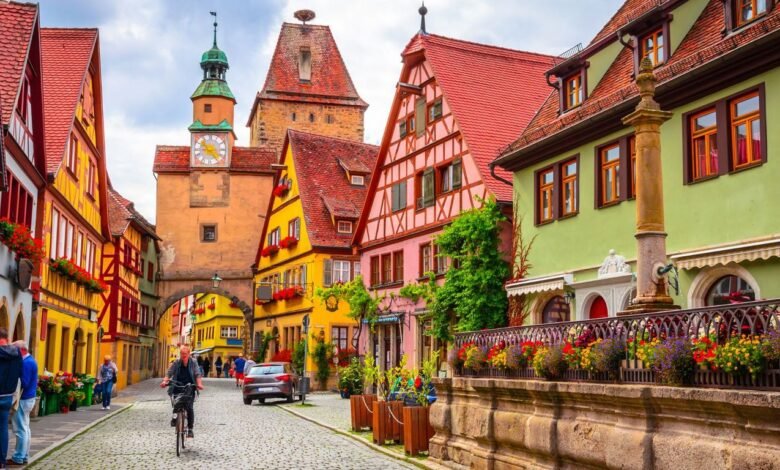
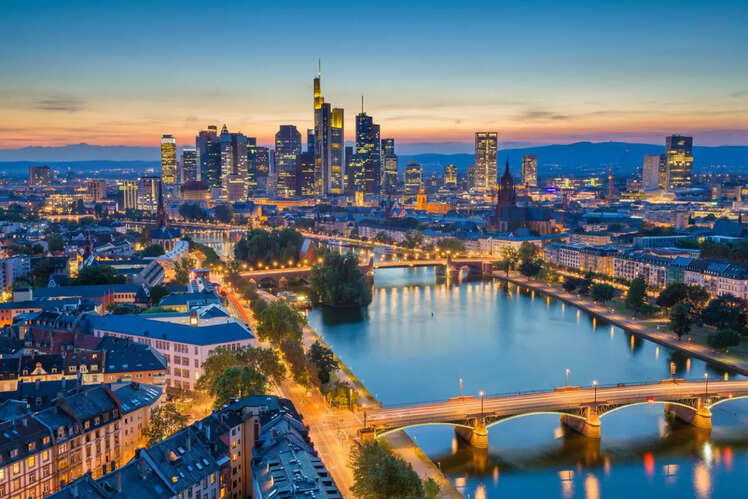
Infrastructure is the next big frontier. The “Deutschlandticket”—a flat-rate monthly pass for all local and regional transport—has revolutionized how Germans move, making the car-free lifestyle a viable reality even in rural areas. We are seeing a “Rural Renaissance” as high-speed fiber-optic networks allow people to work from timber-framed houses in the Black Forest or the Harz Mountains while staying connected to the global economy. Germany is successfully bridging the urban-rural divide, ensuring that the benefits of the digital age aren’t just clustered in the skyscrapers of Frankfurt.
Ultimately, the story of Germany is a story of “Constant Reinvention.” It is a country that has faced the darkest chapters of human history and emerged with a radical commitment to peace, democracy, and human rights. As we move further into 2026, Germany stands as a reminder that a nation’s greatest assets aren’t just its natural resources or its military might, but its people’s ability to work together toward a common goal. Whether it is through a breakthrough in quantum computing or the simple, shared joy of a neighborhood festival, Germany remains the essential heart of Europe—beating with a rhythm of precision, passion, and persistent hope. Let’s go.