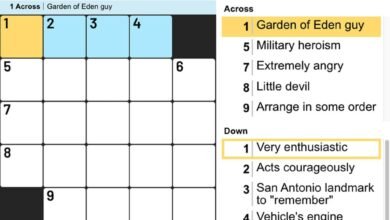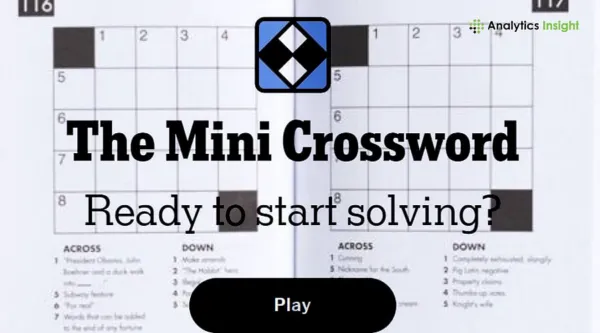
The daily ritual of solving the NYT Mini Crossword has become a digital phenomenon, capturing the attention of millions who seek a quick mental jolt before their morning coffee. Unlike its massive, intimidating older sibling—the traditional 15×15 New York Times Crossword—the Mini is a bite-sized 5×5 grid designed to be solved in under a minute. While it may look simple, finding the right NYT Mini answers requires a specific blend of speed, lateral thinking, and an understanding of the “shorthand” used by puzzle constructors.
In the world of modern digital gaming, the Mini serves as the perfect “entry drug” for word puzzle enthusiasts. It’s accessible, fast, and highly competitive, thanks to the integrated leaderboard that allows you to race against friends. However, as the week progresses, the difficulty spikes, leaving many players searching for hints or full solutions to keep their streaks alive. Understanding the mechanics behind these puzzles is the first step toward becoming a Mini master.
To consistently nail the NYT Mini answers every day, you need to look beyond the literal definitions of the clues. The New York Times is famous for its “misdirection”—clues that lead you toward a common word only to reveal a punny or obscure alternative. This guide dives deep into the architecture of the Mini, providing you with the expert strategies needed to slash your solve times and navigate the trickiest grids with ease.
Understanding the Grid: Why NYT Mini Answers Are Different
The architecture of a 5×5 grid presents a unique challenge for both the constructor and the solver. In a standard crossword, there is plenty of room for “filler” words, but in the Mini, every single letter is high-stakes real estate. This means that the NYT Mini answers are often interconnected in ways that require the solver to maintain a holistic view of the puzzle. You aren’t just solving ten individual clues; you are solving a tiny, interlocking machine where one wrong gear stops the whole mechanism.
Because the grid is so small, constructors like Joel Fagliano often use “crosswordese”—short, vowel-heavy words that help bridge difficult gaps. Words like “AREA,” “OLIO,” “ERIE,” or “ETUI” appear frequently because they are mathematically convenient for the grid. Learning to recognize these common linguistic building blocks is essential. When you see a clue that seems slightly obscure but fits a four-letter slot with three vowels, your brain should automatically start cycling through these classic crossword staples.
Furthermore, the “vibe” of the Mini is significantly more modern and conversational than the daily crossword. You’ll frequently find references to TikTok trends, current slang, and recent pop culture icons. While the traditional puzzle might ask for a 1950s jazz singer, the Mini is more likely to ask for the name of a viral meme or a specific emoji’s meaning. Staying culturally relevant is just as important as having a strong vocabulary when you’re hunting for today’s solutions.
Pro Strategies for Slashing Your Solve Time

NYT Mini Answers .If you want to join the ranks of the “sub-30 second” club, you have to change the way you interact with the interface. Most elite solvers recommend using a desktop or laptop with a physical keyboard rather than a mobile device. Typing on a screen introduces a mechanical lag that can cost you five to ten precious seconds. With a keyboard, you can use the arrow keys and the “Tab” function to fly through the grid, entering NYT Mini answers as fast as you can think of them.
Another high-level tactic is the “Across-First” sweep. Instead of alternating between across and down clues, try to solve all five across clues in one rapid succession without looking at the down clues at all. In many cases, if you can get three or four of the across answers, the down columns will practically solve themselves. This minimizes the cognitive load of switching back and forth and allows you to maintain a singular focus on one direction of the grid.
Don’t get stuck on a single clue. This is the “sunk cost fallacy” of puzzle solving. If a clue doesn’t click within three seconds, move on immediately. Because the grid is so tightly packed, getting the answer to the intersecting clue will almost always give you the first or last letter of the one you’re struggling with. In a 5×5 space, a single letter represents 20% of the answer—a massive hint that usually breaks the mental block and allows the correct word to surface.
Decoding Clue Types and Misdirections
To find the NYT Mini answers consistently, you must learn to read the “subtext” of the clues. The New York Times uses a standardized set of rules to signal what kind of answer is required. For example, if a clue ends in a question mark, it is a definitive signal for wordplay or a pun. A clue like “Fitness center?” isn’t looking for a gym; it’s looking for the word “CORE.” Recognizing these signals instantly narrows your search field from thousands of potential words down to a handful of puns.
Tense and plurality agreement are also non-negotiable rules. If the clue is written in the past tense (e.g., “Sprinted”), the answer must also be in the past tense (e.g., “RAN”). If the clue is plural, the answer will almost certainly end in “S.” While this sounds basic, in the heat of a timed solve, many players lose seconds by trying to fit “RUN” into a three-letter slot when the grid actually requires the plural “RUNS.” Always match the grammar of the clue to your potential answer.
Finally, be wary of the “hidden in plain sight” clues. Occasionally, the Mini will feature a “theme” even in its small format, or clues that refer back to each other. You might see “Part 1 of a quote” and “Part 2 of a quote” as two separate clues. These are high-risk, high-reward; if you know the quote, you’ve just solved 40% of the puzzle. If you don’t, you’ll have to rely entirely on the intersecting down clues to rebuild the quote letter by letter.
The Evolution of the NYT Mini Community
The search for NYT Mini answers has birthed a massive online community of “Mini-heads” who share their times and frustrations on social media daily. This social aspect is a huge part of the game’s longevity. Whether it’s a “brag post” on X (formerly Twitter) or a competitive group chat with coworkers, the Mini has turned a solitary activity into a communal event. It provides a shared language and a collective challenge that fits perfectly into the fast-paced nature of modern life.
This community has also led to the rise of “hint culture.” Many players prefer to get a slight nudge rather than the full answer, leading to the popularity of daily columns and blogs that explain the logic behind the clues. These resources help players grow their skills rather than just filling in boxes. By understanding why an answer is what it is, solvers build a mental library of patterns that they can use in future puzzles, gradually decreasing their reliance on external help.
Ultimately, the NYT Mini is more than just a game; it’s a daily mental calibration tool. It tests your vocabulary, your cultural knowledge, and your ability to perform under pressure. Whether you solve it in 15 seconds or 5 minutes, the satisfaction of seeing that gold “Correct!” screen remains the same. As the puzzles continue to evolve and reflect the language of the 2020s, the quest for the perfect solve will continue to be a staple of the daily digital routine for millions.