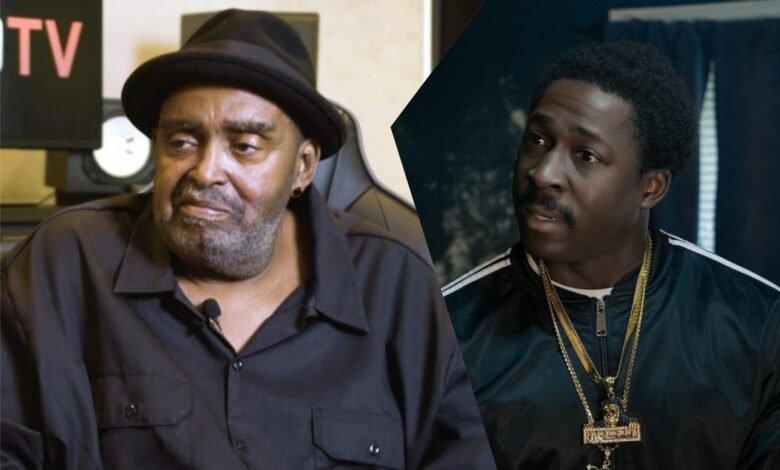
The Genesis of a Legend: Who Was Layton Simon?
In the gritty, neon-soaked history of Detroit’s underworld, few names carry as much weight or as much mystery as Layton Simon. To the average observer of 2026, he might seem like a character straight out of a premium crime drama, but for those who lived through the transformative decades of the 70s and 80s in the Motor City, Layton was a very real, very formidable force. He wasn’t just a “hustler” in the traditional sense; he was a strategic pioneer who helped redefine the mechanics of street-level commerce during one of the most volatile periods in American urban history. While the history books often focus on the flashy, headline-grabbing syndicates, Layton operated with a level of calculated precision that earned him the respect of both his peers and his adversaries.
Born into the heart of a city that was rapidly shifting from an industrial powerhouse to a landscape of socioeconomic struggle, Layton Simon emerged as a natural leader. He possessed an innate understanding of “market dynamics” long before he ever picked up a business textbook. In Detroit, the streets were the ultimate classroom, and Layton was a straight-A student. He recognized early on that power wasn’t just about force; it was about reliability, logistics, and building a network that functioned like a well-oiled machine. By the time he was in his late teens, he had already established a reputation for being a man of his word—a trait that is often the most valuable currency in the informal economy.
Expertly speaking, Layton’s rise can be attributed to his ability to navigate the “power vacuum” left by the decline of traditional manufacturing. As the big auto plants slowed down, the informal sector expanded to fill the void, and Layton was at the forefront of this transition. He wasn’t just looking for a quick score; he was building a sustainable operation. This “long-game” mentality is what distinguished him from the hundreds of other ambitious young men on the corner. He understood the importance of territory, but more importantly, he understood the importance of people. His legacy isn’t just a story of “crime”; it’s a story of a man who mastered the art of survival and influence in a world that offered very few legitimate exits.
The Master of Logistics: Redefining the Street Economy

When we look at the operational success of Layton Simon, we are essentially looking at a masterclass in supply chain management. In the 1980s, the “drug game” was evolving from a localized hustle into a sophisticated global industry, and Layton was one of the first to apply corporate-level logic to his distribution networks. He didn’t just move products; he managed “touchpoints.” From the point of entry to the final transaction, every step was monitored for efficiency and risk. This was “Just-In-Time” delivery practiced in the most high-stakes environment imaginable. Layton’s ability to maintain a steady flow of goods while avoiding the gaze of federal and local task forces for years is a testament to his tactical genius.
One of the most fascinating aspects of Layton’s strategy was his “low-profile” approach to high-stakes living. While many of his contemporaries were obsessed with custom furs, gold chains, and flashy cars—the kind of visibility that eventually leads to a courtroom—Layton preferred a more “stealth-wealth” aesthetic. He knew that in the world of logistics, visibility is a liability. By staying beneath the radar, he was able to consolidate power without inviting unnecessary competition or law enforcement scrutiny. This expert-level understanding of “operational security” (OPSEC) is something that modern digital privacy advocates still talk about today. He lived in the shadows because he knew that’s where the real power resided.
Furthermore, Layton was a pioneer in “social engineering.” He knew that a successful operation required the cooperation, or at least the silence, of the community. He invested in his neighborhood in ways that the local government often failed to. Whether it was helping a family with groceries or ensuring that the streets stayed “quiet” during school hours, Layton acted as a de facto social worker. This wasn’t just out of the kindness of his heart; it was a brilliant “community relations” strategy. By becoming an indispensable part of the local fabric, he created a human shield that protected his business interests. It’s a model of “guerilla governance” that has been studied by sociologists and criminologists alike to understand why certain figures remain untouchable for so long.
The “BMF” Connection: Mentorship and the Next Generation
You cannot tell the story of Layton Simon without mentioning his influence on the Flenory brothers, Demetrius “Big Meech” and Terry “Southwest T,” who would go on to found the Black Mafia Family (BMF). In the early days, before the private jets and the global fame, the Flenory brothers looked up to Layton as a mentor and a blueprint for success. Layton provided the “professional framework” that the brothers would eventually scale to a national level. He taught them that the business was 10% product and 90% politics. He showed them how to lead men, how to handle disputes with diplomacy before bullets, and how to maintain the loyalty of a crew.
Expertly speaking, the transition from the “Layton Simon Era” to the “BMF Era” marks the shift from localized street gangs to organized national syndicates. Layton was the bridge between these two worlds. He took the raw ambition of the Detroit youth and channeled it into a structured hierarchy. While Layton eventually stepped back from the front lines, his “DNA” was all over the BMF operations. The emphasis on loyalty, the sophisticated use of front businesses, and the cult of personality that Big Meech eventually perfected were all lessons learned at the feet of Layton Simon. He was the “Professor of the Streets,” and the Flenory brothers were his most famous graduates.
In 2026, with the massive success of television series dramatizing this era, Layton’s role has been brought back into the public consciousness. However, the screen often misses the nuance of his mentorship. It wasn’t just about teaching them how to sell; it was about teaching them how to be. Layton instilled a sense of “urban nobility” in his proteges—a code of conduct that prioritized the brotherhood above all else. This code is what allowed BMF to thrive for nearly two decades. Even as the brothers moved into the world of hip-hop and high-society, the foundational lessons of discipline and discretion that they learned from Layton remained the core of their identity. He didn’t just build a network; he built a philosophy.
Reflections on a Complicated Legacy: Detroit and Beyond
As we look back at the life of Layton Simon from the vantage point of 2026, we are faced with a complicated moral landscape. To some, he is a “villain” who contributed to the devastation of urban communities during the crack epidemic. To others, he is a “folk hero”—a man who defied the odds and rose to the top of a system that was designed to keep him at the bottom. The truth, as it always does, lies somewhere in the middle. Layton was a product of his environment, but he was also the architect of it. He was a man of immense talent and intelligence who used the only tools available to him to build a life of significance.
From an expert sociological perspective, Layton Simon is a symbol of the “Lost Potential” of the inner city. Imagine what a mind like his could have achieved if it had been directed toward the legitimate boardrooms of Fortune 500 companies. His understanding of psychology, economics, and leadership was on par with any Ivy League graduate. The tragedy of the “Layton Simon Story” isn’t the crime itself; it’s the fact that in 1980s Detroit, the street was the only place that would hire a man with his level of ambition. His life is a reminder of the need for “on-ramps” to success in communities that are often left behind. He succeeded in spite of the world, not because of it.
Ultimately, the legacy of Layton Simon is one of resilience. He survived the wars of the 80s, the crackdowns of the 90s, and the changing tides of the new millennium. He remains a respected elder in the Detroit community, a living library of a time that transformed America. His story is a vital chapter in the history of the Motor City, a narrative of power, pain, and the pursuit of the American Dream in its most raw and unfiltered form. Whether you view him through the lens of history, sociology, or true crime, one thing is undeniable: Layton Simon was a man who moved the needle, and his influence will be felt on the streets of Detroit for generations to come. Let’s go.