The Evolution of a Giant: Celebrating “Google Geburtstag” and the Digital Revolution

The September Mystery: When Exactly is Google’s Birthday?
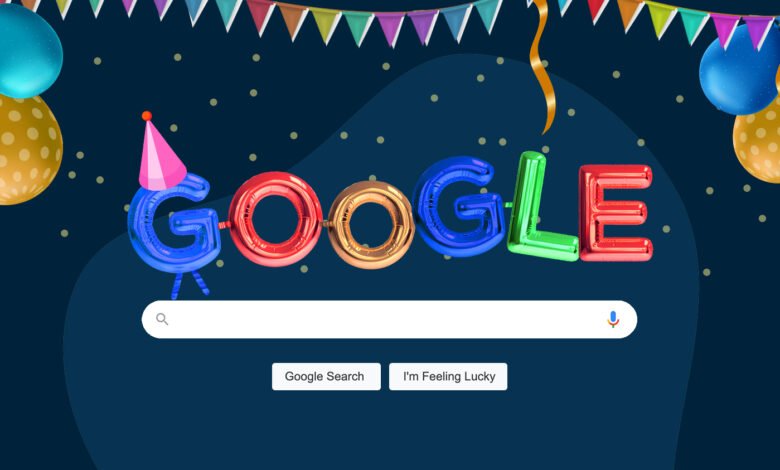
If you’ve ever noticed a particularly festive “Doodle” on your search screen toward the end of September, you’ve witnessed the annual celebration known in Germany and beyond as Google Geburtstag. But here’s a bit of expert trivia to start us off: Google’s actual origin story is a bit more fluid than a single calendar date might suggest. While the company was officially incorporated on September 4, 1998, they have spent the last two decades celebrating their “Geburtstag” on September 27. Why the shift? It was largely a strategic move back in 2005 to align the birthday celebration with a record-breaking announcement regarding the size of their search index.
Since that time, September 27 has become the fixed point in the digital calendar for reflection, celebration, and—of course—Easter eggs. For the casual user, it’s just a day of fun animations, but for the digital historian, it marks the anniversary of a project that moved from a Stanford University dorm room to the center of global infrastructure. Larry Page and Sergey Brin originally named their creation “BackRub,” a title that focused on the engine’s ability to analyze “backlinks.” Thankfully, they pivoted to a play on the mathematical term “googol,” representing a 1 followed by 100 zeros, perfectly encapsulating their mission to organize an infinite amount of information.
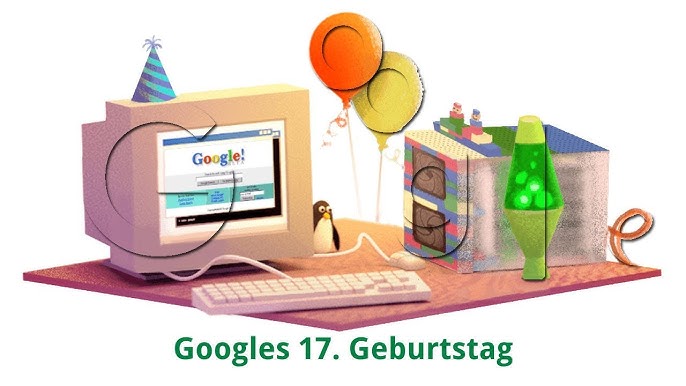
In 2026, celebrating Google Geburtstag feels more significant than ever. We are no longer just looking at a search engine; we are looking at an AI-first ecosystem that powers everything from autonomous transportation to quantum computing. The birthday isn’t just a corporate milestone; it’s a benchmark for how far human-computer interaction has come. Every year, the “Google Geburtstag” Google Doodle serves as a creative retrospective, often featuring nostalgic nods to the early “Lego-clad” servers or the iconic multi-colored logo that has become the most recognized visual in the history of the internet.
From Stanford to the Stars: The Milestones of Innovation
To understand the weight of Google Geburtstag, you have to look at the “Invention Arc” that the company has followed. In the early years, the breakthrough was the PageRank algorithm—the expert-level realization that the importance of a webpage could be determined by the quality and quantity of other pages linking to it. This changed the internet from a chaotic digital library into a searchable, hierarchical map. As the years passed, the birthday celebrations marked more than just search improvements; they marked the birth of Gmail (launched on April Fools’ Day), the acquisition of YouTube, and the development of the Android operating system.
By the time Google hit its “teenage years,” the focus shifted toward mapping the physical world. Google Maps and Google Earth transformed the way we perceive geography. Each “Geburtstag” became a moment to showcase how the company was moving from “answers” to “actions.” In 2026, we see the culmination of this in the Gemini era, where search has evolved into a multimodal conversation. On a recent Google Geburtstag, the company highlighted its progress in “Search Generative Experience” (SGE), showing how the engine can now synthesize complex information across millions of sources into a single, coherent insight.
Expertly speaking, the “Google Geburtstag” also serves as an annual audit of the company’s “Moonshot” projects under the Alphabet umbrella. Whether it’s progress in Waymo’s autonomous driving data or Verily’s life sciences breakthroughs, the birthday provides a window into the future. It’s a day where the company reminds us that they aren’t just an advertising firm; they are a laboratory for human potential. For the tech-savvy observer, the birthday is less about the party and more about the “State of the Union” for the world’s most influential data architect.
The Culture of the Doodle: Art Meets Algorithm
One of the most beloved traditions of Google Geburtstag is the specialized Google Doodle. These aren’t just pretty pictures; they are a fusion of art, history, and engineering. The first-ever Doodle was actually an “Out of Office” message in 1998, when Larry and Sergey headed to the Burning Man festival and placed the festival’s logo behind the second ‘o’ in Google to let users know the staff was away. Since then, the Doodle team has grown into a world-class studio of illustrators and engineers who turn the search bar into a canvas for global storytelling.
On Google’s birthday, the Doodle usually takes a self-referential turn. We’ve seen interactive games that let you play through the company’s history, animated timelines of old hardware, and even AI-powered Doodles that create music or art based on user input. From a marketing perspective, this is a masterclass in brand humanization. It takes a massive, data-driven corporation and gives it a sense of playfulness and curiosity. This “casual expert” tone is exactly what has kept Google in the good graces of the public for nearly three decades; they treat information with gravity but their brand with a wink.
Beyond the aesthetics, the “Geburtstag Doodle” often hides technical Easter eggs. If you click through a birthday Doodle in 2026, you might find hidden features that allow you to “Leap” through the history of search results—seeing how the page for “Space Exploration” looked in 1999 versus how it looks today in a VR-enhanced environment. It’s an exercise in digital nostalgia that reminds us of the speed of progress. The Doodle is the bridge between the complex algorithms running in the background and the human user who just wants to find a recipe or check the weather.
The AI Leap: Google’s Birthday in the 2020s
As we celebrate Google Geburtstag in 2026, the conversation has shifted entirely toward the “AI-First” paradigm. For years, the birthday was about indexing the web; now, it’s about understanding it. The transition from a search box to a personal assistant—powered by the Gemini architecture—is the most significant shift since the company’s inception. On this year’s birthday, the expert consensus is that Google has successfully navigated the “AI Arms Race,” integrating generative intelligence into every facet of the Workspace, from automated “Help Me Write” features to complex data analysis in Sheets.
Expertly speaking, the 2026 birthday marks the maturity of “Neural Search.” This means the engine no longer just looks for keywords; it understands intent, context, and the relationship between concepts. If you search for “that blue building in Berlin with the weird windows,” the AI understands the visual and linguistic cues to give you the exact location. This level of sophistication is what Google has been building toward since its “BackRub” days. The birthday is a reminder that the mission to “organize the world’s information” is no longer just a static goal—it’s a dynamic, evolving process that adapts to how we think and speak.
However, with this power comes the expert-level discussion on ethics and data privacy. Every Google Geburtstag is accompanied by a renewed commitment to user security. In 2026, the focus is on “On-Device Processing,” where as much AI computation as possible is done on your local phone or laptop rather than in the cloud. This ensures that while Google is helping you organize your life, they are doing so with a “Privacy-by-Design” philosophy. It’s a delicate balance of providing hyper-personalized service while maintaining the trust that is required to be the world’s most-used tool.
The Global Impact: Google as a Utility and a Landmark
Ultimately, Google Geburtstag is a global event because Google has become a global utility. In many parts of the world, “to google” is synonymous with the act of learning itself. The company’s birthday is celebrated in dozens of languages, reflecting its role as a cross-cultural bridge. From providing free educational tools via Google Classroom to offering real-time translation services that break down linguistic barriers, the company’s impact on global literacy and connectivity is impossible to overstate. It has turned the world into a “global village” where information is a right, not a privilege.
From an economic standpoint, Google’s birthday is a celebration of the “Digital Economy.” Thousands of businesses, from “Mittelstand” firms in Germany to startups in Silicon Valley, owe their growth to the visibility provided by Google Search and Ads. The ecosystem created by the company has generated trillions of dollars in economic value over the last 28 years. When we celebrate “Google Geburtstag,” we are also celebrating the millions of creators, developers, and entrepreneurs who use the platform to reach their audience. It is the central nervous system of modern commerce.
As we look toward the next twenty-five years, the “Google Geburtstag” will likely evolve to include milestones in quantum supremacy and sustainable energy. The company’s goal to operate on 24/7 carbon-free energy by 2030 is often a highlight of their birthday updates. In 2026, we see a company that is as focused on the health of the planet as it is on the health of the index. It is this “long-view” expertise that ensures Google remains relevant. So, when that colorful “Geburtstag” Doodle appears on your screen this September, take a moment to appreciate the journey from a simple search box to a force that shaped the 21st century. Let’s go.