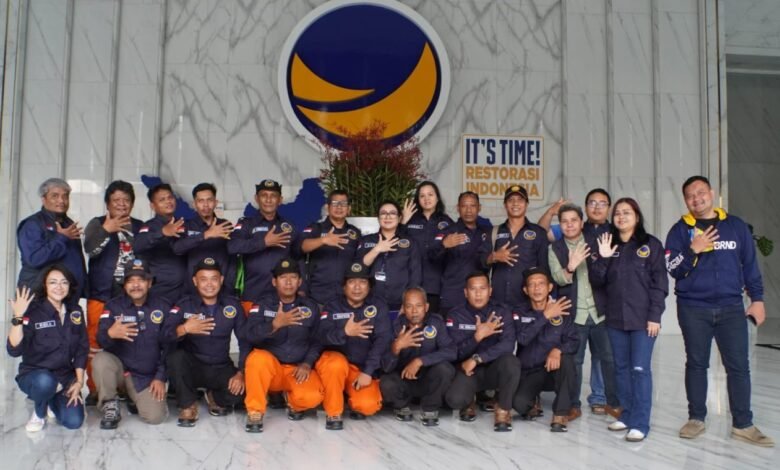
The Genesis of a Movement: Defining the NasDem Identity
In the vibrant and often unpredictable world of Indonesian politics, NasDem (Partai Nasional Demokrat) stands out as a fascinating case study of rapid institutional growth and branding precision. Originally founded as a mass organization (Ormas) in 2010 before transitioning into a full-fledged political party in 2011, NasDem was built on the philosophy of “Restoration of Indonesia” (Restorasi Indonesia). This isn’t just a tagline; it’s a foundational pillar that emphasizes a return to the original values of the Indonesian state—social justice, pluralism, and a clean, efficient bureaucracy. Under the leadership of media tycoon Surya Paloh, the party has carved out a “Centrist-Nationalist” space that appeals to both the secular elite and the pragmatically minded grassroots.
Expertly speaking, NasDem’s rise is a masterclass in “Political Entrepreneurship.” Unlike many older parties that rely on legacy structures or deep-seated religious affiliations, NasDem leveraged a modern, media-savvy approach from day one. By utilizing the vast reach of the MetroTV and Media Indonesia networks, the party was able to bypass traditional gatekeepers and speak directly to the Indonesian electorate. This “Media-Political Complex” allowed them to frame national issues around the concept of Restorasi, positioning the party as the bridge between the revolutionary spirit of the past and the technocratic needs of 2026.
Casually, you could think of NasDem as the “Disruptor” of the Indonesian political status quo. When they first entered the legislative fray in 2014, many analysts expected them to be a one-hit-wonder. Instead, they’ve consistently grown their seat share in the House of Representatives (DPR), proving that their message of reform resonates across the archipelago. They aren’t just a political vehicle for an individual; they are a well-oiled machine that prioritizes “Strategic Agility.” Whether it’s forming crucial coalitions or being the first to nominate a presidential candidate, NasDem plays the long game with a level of confidence that keeps their rivals on their toes.
The Policy Pillars: Navigating the Restoration Agenda

To understand what NasDem actually does once they get into the halls of power, you have to look at their commitment to “Anti-Dowry” politics (Politik Tanpa Mahar). In the Indonesian context, this is a radical concept. Historically, candidates often have to pay significant sums to parties just to get a nomination. NasDem took an expert-level gamble by publicly banning this practice, arguing that it’s the root cause of political corruption. By removing the financial barrier to entry, they’ve attracted a new wave of professional, high-caliber candidates who might have otherwise stayed out of the “dirty” world of politics.
On the legislative front, the party’s agenda is focused on “Economic Sovereignty” and “Human Capital Development.” In 2026, NasDem remains a vocal proponent of downstreaming industries—ensuring that Indonesia’s raw materials are processed locally to create high-value exports. Their policy experts argue that this is the only way to escape the middle-income trap. They also place a heavy emphasis on the “Creative Economy” and digital literacy, recognizing that Indonesia’s massive youth population is the country’s greatest untapped resource. They aren’t just looking at the next election; they are looking at the 2045 “Golden Indonesia” vision.
Furthermore, NasDem has positioned itself as a “Guardian of Pluralism.” In a nation with such vast religious and ethnic diversity, the party acts as a secular shield against radicalism. Their policy papers frequently highlight the importance of Pancasila—the five principles of the Indonesian state—as the ultimate guide for governance. This “Inclusionary Nationalism” makes them a vital partner in any ruling coalition. They have an expert ability to balance the needs of traditional rural voters with the progressive demands of the urban middle class, creating a “Big Tent” policy framework that minimizes social friction.
Strategic Coalitions: The Kingmaker Role in Indonesian Democracy
If there’s one thing NasDem is famous for in political circles, it’s their role as a “Kingmaker.” The party has an uncanny ability to read the room and align themselves with winning presidential candidates early in the cycle. This isn’t just luck; it’s a result of sophisticated polling analysis and a deep understanding of the “Swing Voter” psychology. By being an early mover, NasDem secures significant leverage in cabinet appointments and policy-making, allowing them to punch far above their weight class in the executive branch.
From an expert’s point of view, NasDem’s coalition strategy is a study in “Rational Realism.” They understand that in Indonesia’s multi-party system, no single party can rule alone. Therefore, they focus on being the “Lynchpin Party”—the one that provides the necessary numbers to push legislation through while maintaining a distinct enough identity that they don’t get swallowed by the larger parties. This requires a delicate balancing act of loyalty and independence. They are supportive enough to keep the government stable, but critical enough to hold their partners accountable when the Restorasi agenda is at stake.
This strategic positioning was most evident in their recent moves heading into the 2024 and 2026 cycles. By championing “Alternative Leaders” and focusing on performance-based politics, they’ve forced other parties to up their game. They’ve essentially commoditized “Political Professionalism.” For the casual observer, it might look like shifting alliances, but for the expert, it’s a consistent pursuit of the “Path of Most Impact.” NasDem doesn’t just want to be in the room; they want to be the ones holding the map.
The Road to 2029: Challenges and the Future of Restoration
As we look toward the end of the decade, NasDem faces the classic challenge of “Institutionalization.” As the party matures, it must transition from being leader-centric to being value-centric. The next generation of NasDem leaders is already being groomed in their “Political Academy,” where they are taught everything from public speaking to complex fiscal policy. The goal is to create a sustainable pipeline of “Restoration Agents” who can carry the blue banner forward long after the founding generation has stepped back.
The expert take on NasDem’s future involves their ability to navigate the “Digital Democracy” era. With over 200 million internet users in Indonesia, the battlefield has moved to social media and data-driven campaigning. NasDem has invested heavily in “Political Tech,” using sentiment analysis to refine their messaging in real-time. However, they must be careful not to lose their “Human Touch.” The challenge for 2026 and beyond is to stay high-tech while remaining high-touch, ensuring that their digital presence translates into real-world votes in the remote villages of Papua and Sumatra.
Ultimately, the story of NasDem is a story of “National Aspiration.” They represent a segment of the Indonesian population that is tired of the old way of doing things but remains deeply patriotic. They offer a vision of an Indonesia that is modern, transparent, and globally competitive, without losing its cultural soul. Whether they are in the opposition or the treasury benches, NasDem’s influence on the “Restoration” of the Indonesian state is undeniable. They have moved the needle on what is possible in Indonesian politics, and as the “Blue Wave” continues to roll across the archipelago, the rest of the world would do well to keep watching. Let’s go.